 25 minutes
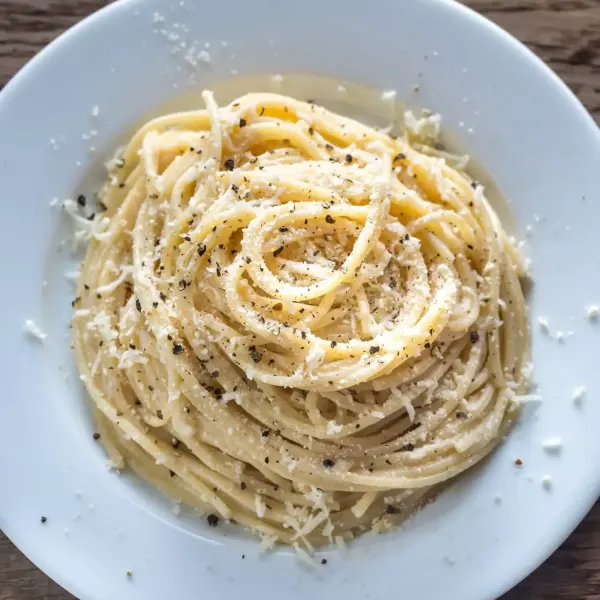
Cacio e Pepe is a fundamental Roman pasta, which true to its origins is surprisingly delicious given its simplicity.

0 oz
Pecorino, Microplaned
cups
Parmesan Cheese, Microplaned
cups
Black Pepper, Freshly ground
to taste
1. Cook Pasta
Bring a large pot of salted water to a boil. Boil just enough water to cover the pasta during cooking, this will save you some time waiting for the water to boil and also ensure you have enough starch in the water for the next steps. Add about a teaspoon of salt per quart of water given all of the salty ingredients in the dish.
2. Heat Oil
In a saute pan, heat the olive oil until very warm but not smoking and add the pepper. Cook the pepper until it's fragrant, then add about a half cup of pasta water and remove from the heat.
3. Melt cheese
Add about a quarter cup of the pasta water to the bowl of the grated cheese, stirring well to combine.
4. Sauce Pasta
Once the pasta is cooked, drain it, reserving about a cup of the pasta water. Over medium heat, mix and toss the pasta in the pan while the sauce reduces. At this stage, a few critical things are happening. You’re finishing to cook the pasta, while also emulsifying and reducing the sauce. This emulsion between the oil and starchy pasta water will help the cheese to melt smoothly into the sauce.
5. Add Cheese
Once the water has reduced about 80-90% of the way, remove the pan from the heat. At this stage, add the cheese while tossing and stirring until the cheese has all melted. The final texture of the sauce should be smooth and creamy if everything has gone right. If you find that the sauce is quite thick, simply add a bit of pasta water to loosen it.
6. Serve
Once all of the cheese has melted, and your sauce is creamy, taste for seasoning and serve.





Comments (0)